
Holiday campaign planning works best when it starts weeks before the first holiday ad goes live, because most of the decisions that shape your results are made long before shoppers start searching. By the time Black Friday arrives, that work is either done or missed. This year, Thanksgiving falls on November 26. That puts Black Friday on November 27 and Cyber Monday on November 30.
Most businesses treat the holidays like a switch they flip in November. They raise budgets, write a quick promotion and hope the season carries them. The usual result is a rushed launch, ads still waiting for approval on the busiest day and landing pages that don’t match the offer.
The businesses that do well in December rarely work harder that month. They started earlier. Their budgets were set, their pages were tested and their teams knew who would answer the phone the Saturday after Thanksgiving.
If you’re reading this in mid-November, you still have time to tighten this year’s plan. You can also make sure next year’s holiday campaign planning starts on time.
What does holiday campaign planning actually include?
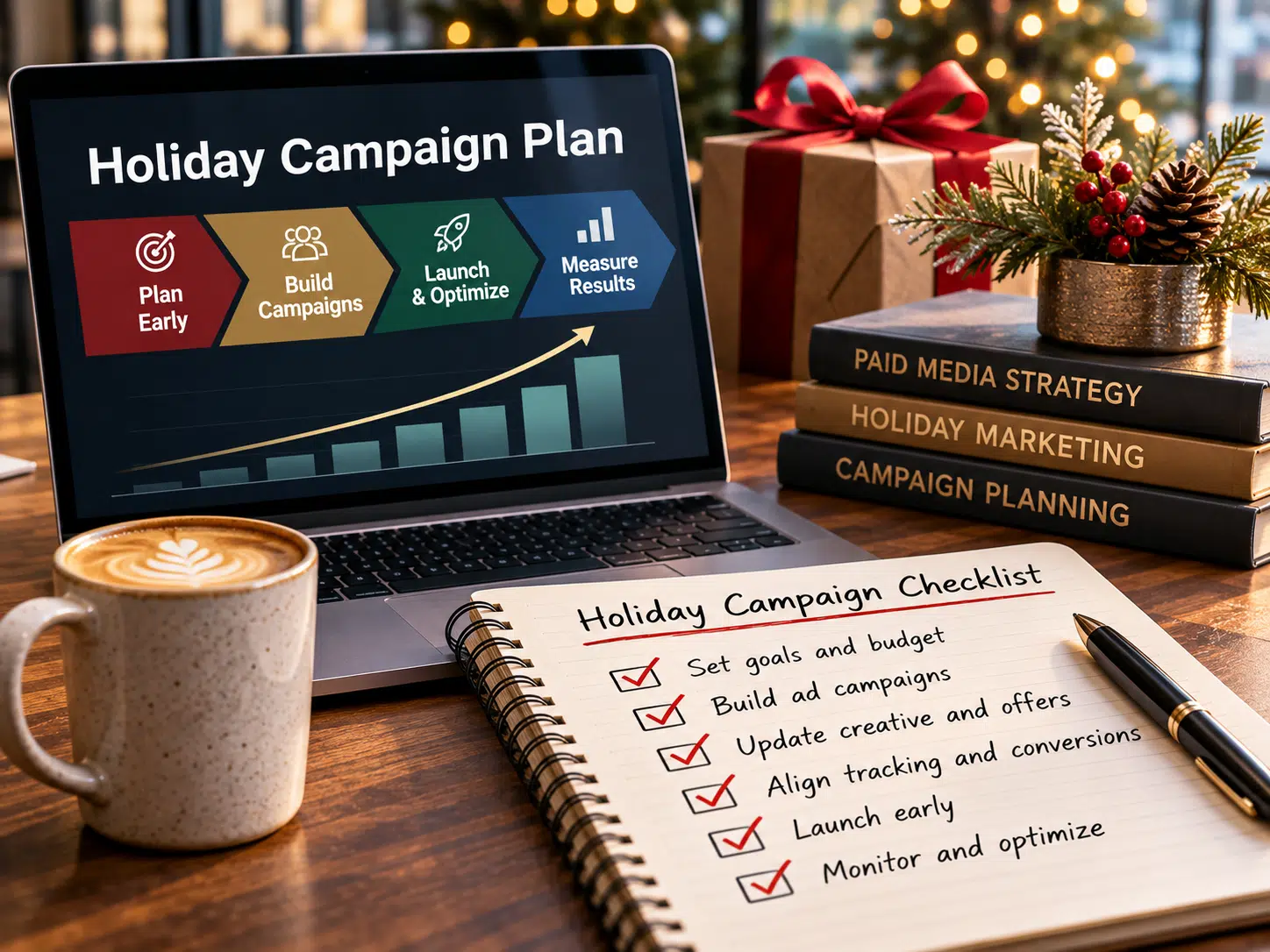
Holiday campaign planning includes your offer, budget, channels, creative, landing pages and a calendar that ties each piece to specific dates. It also covers the details people forget, like staffing, phone coverage and tracking.
Think of it as a playbook you finish before the game starts. Each piece depends on the others. A strong ad that sends people to a weak page means you pay for clicks that never turn into customers.
A complete plan covers six areas:
- Offer: One clear promotion, gift card deal or booking incentive with a real end date.
- Budget: A total spending ceiling and a ranked list of campaigns that get extra money first.
- Channels: Where you’ll show up, such as Google Ads, Meta (Facebook and Instagram), email and your Google Business Profile.
- Creative and pages: Ads and landing pages that make the same promise.
- Calendar: Launch dates, key shopping days, shipping or booking cutoffs and holiday hours.
- Tracking: Calls, forms and sales tied back to each campaign.
Retailers aren’t the only ones who need holiday campaign planning. A heating company, dental office or salon still sees demand shift in November and December. Without a plan, that shift catches you off guard.
Why does holiday campaign planning work better when it starts early?
Holiday campaign planning works better early because ad platforms, search engines and your own team all need time to get ready before demand peaks. If you start late, your campaigns are still learning on the days that matter most.
How much lead time do ad platforms need?
Ad platforms usually need about a week after a major change before performance settles. Google’s automated bidding typically takes around seven days to recalibrate after a significant edit. Meta reviews most new ads within 24 hours, but some take longer.
If you launch on Thanksgiving, your campaigns spend Black Friday weekend working out who to target. That’s an expensive week to be learning.
Why does early planning protect your budget?
Early planning protects your budget because you make spending decisions with data instead of under pressure. Ad prices are set by auction. As more advertisers bid on the same searches in late November, the cost per click usually rises.
A plan written in October tells you which campaigns deserve more money. A plan written on Black Friday morning usually just raises everything.
Content runs on an even longer timeline. New pages often need three to six months to rank, which is why the ideas in why Q4 is the quarter most businesses underinvest in content and overpay for later apply directly to holiday campaign planning.
When should holiday campaign planning start?
For most businesses, holiday campaign planning should start eight to twelve weeks before your first promotion, which means August or September if you’re targeting Black Friday. That gives you time to build, test and adjust before costs climb.
Here’s a practical timeline:
- August to September: Review last year’s results, choose your offer, set a budget ceiling and pick your channels.
- Early October: Build landing pages, write ad copy, set up tracking and submit new ads for review.
- Late October to early November: Launch campaigns, let them gather data and raise budgets only on what converts.
- Thanksgiving week through Cyber Monday: Check results daily, use seasonality adjustments for short spikes and avoid big structural changes.
- December: Shift messaging toward last-minute offers, gift cards or January bookings as cutoffs pass.
Seasonality adjustments are a Google Ads setting that tells automated bidding to expect a short, temporary jump in conversion rates. Google recommends them for events lasting a few days, not entire months. Black Friday weekend is a good fit.
What if the holiday season has already started?
If the season has already started, focus on fixes that pay off this week instead of rebuilding everything. Confirm that your ad schedule matches your open hours and your holiday hours are set on your Google Business Profile. Make sure landing pages mention the current offer and expired promotions are turned off.
Then start a note for next year. Write down what broke, what cost too much and what you wish you’d decided earlier. That list becomes page one of next year’s holiday campaign planning.
How much should you budget for a holiday campaign?
The right holiday budget is the most you can spend while keeping your cost per lead or cost per sale below what a customer is worth to you. Start with your own math, not a percentage you saw online.
Here’s a simple example. If an average job brings in $900 in profit and you close one in three leads, each lead is worth about $300. At $180 per lead, you’re profitable. At $350, you’re losing money on every lead.
Good holiday campaign planning puts that ceiling in writing before the auction heats up. It also accounts for how Google Ads spends. Google can spend up to twice your average daily budget on a busy day, but caps monthly charges at 30.4 times that daily amount.
More money isn’t always the answer. Extra budget helps campaigns that keep running out of money before the day ends. It does nothing for a campaign with a weak offer or a page that doesn’t convert.
How should your search data shape a holiday campaign?
Your search data shows when demand rises, which searches turn into customers and which pages are ready for paid traffic, so it should guide holiday campaign planning from the start. Search engine optimization (SEO) data and ad data tell the same story from two angles.
A full year of traffic in Google Search Console reveals the weeks your customers start searching. If interest climbs in mid-October, your campaigns should be live before then. Our guide on how end-of-year SEO reviews surface what a full year of traffic is actually telling you explains how to read those patterns.
Paid and organic also support each other during the season. Shoppers who click a holiday ad often browse your site and read reviews before they call. Strong pages and recent reviews make each paid click more likely to become a customer.
At Massifco, we plan paid, organic and local search together. Gaps in one channel tend to show up as higher costs in another, so holiday campaign planning that looks at all three catches problems earlier.
How do you know your holiday campaign plan is ready?
Your holiday campaign planning is ready when you can answer yes to every point below. If two or more get a no, fix those first.
- You’ve written down one clear holiday offer with a real start and end date.
- You know what a lead or sale is worth and the highest cost you’ll accept.
- Your campaigns are ranked so any extra budget goes to proven performers first.
- Every landing page matches its ad and makes calling, booking or buying easy.
- Your ad schedule and Google Business Profile hours match the times someone can actually respond.
- Your biggest campaign changes will be finished at least two weeks before Black Friday.
- Your tracking is tested, so calls and forms tie back to specific campaigns.
Smaller gaps can be handled during the season. Broken tracking or a mismatched landing page will cost you from the first click.
What Customers Often Ask
How early should a small business start holiday campaign planning?
A small business should start holiday campaign planning eight to twelve weeks before its first promotion. That leaves time to set a budget, build pages and let ads gather data. If time is short, prioritize your offer, landing page and tracking.
Do service businesses need a holiday campaign?
Yes, many service businesses see demand shift during the holidays even if they don’t sell gifts. Heating repair, cleaning and catering often get busier, while some project-based services slow as customers wait for January. Last year’s data shows which way your season leans.
Should I keep running ads after Cyber Monday?
Usually yes, but change the message. December searches often shift toward last-minute gifts, gift cards, holiday hours and January bookings. Update offers as cutoffs pass so you don’t pay for clicks on promotions that already ended.
What’s the most common holiday campaign mistake?
The most common mistake is launching late and changing too much at once. Campaigns launched during Thanksgiving week spend the busiest days learning, and big edits restart that process. Holiday campaign planning that wraps up by early November avoids both problems.
Where This Leaves Your Holiday Plan
Holiday campaign planning pays off when the hard decisions happen before the season, not during it. Set your offer and budget ceiling early, give ad platforms time to learn, match every ad to its page and use a full year of search data to time your launch.
If this season has already started, fix what you can this week and start next year’s notes today. The businesses that win in December usually started in September.
If you want help building a holiday plan that’s ready before demand peaks, talk to a specialist at Massif.co about your next step.